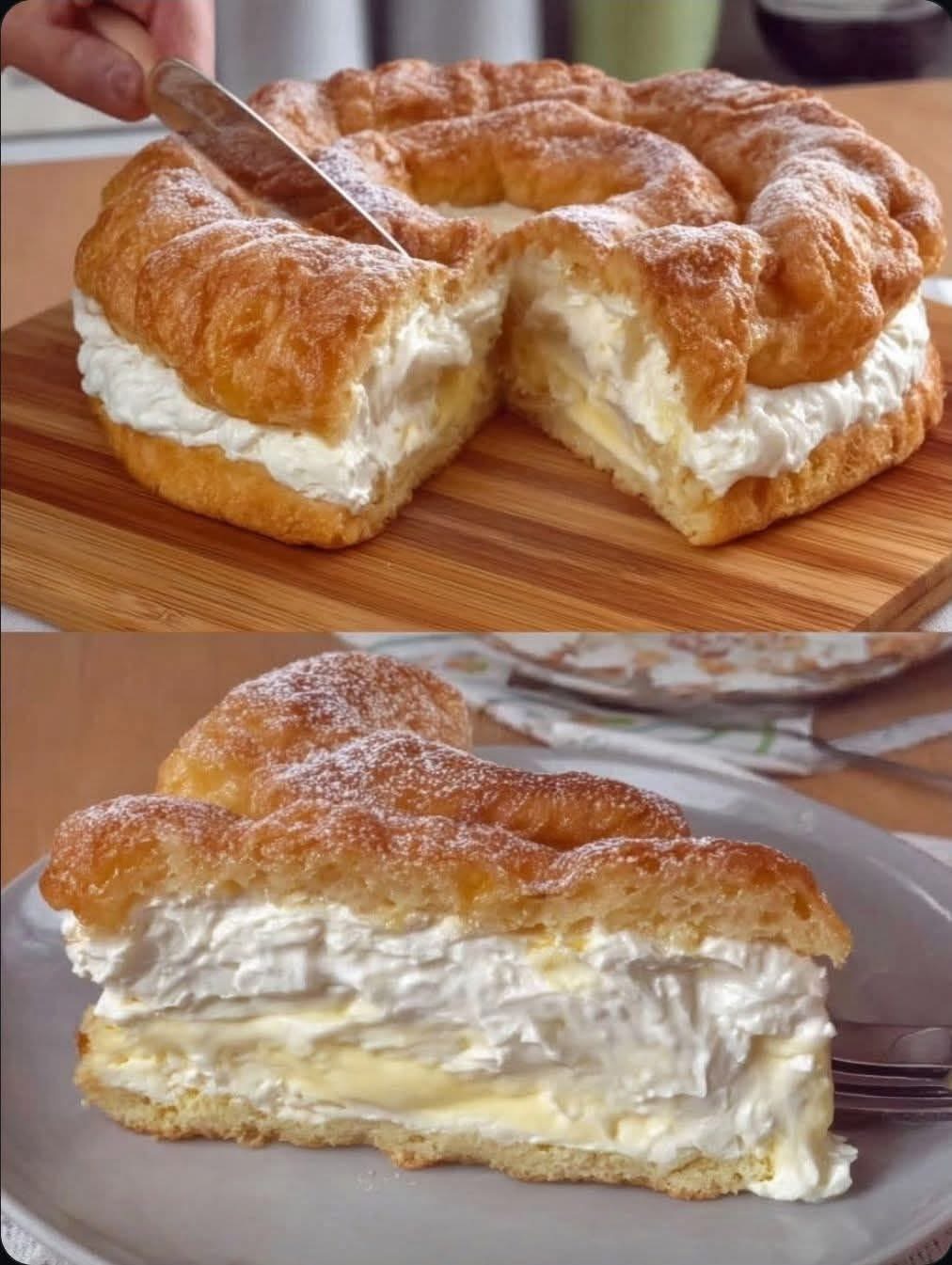
There are some desserts that immediately catch the eye even before the first bite is taken. The cream-filled ring pastry shown in the images is one of those creations. With its airy layers, golden exterior, and generous filling of whipped cream and custard, it represents the kind of dessert that impresses with its appearance as much as with its flavor. This type of pastry has a long history in European baking, and its appeal continues because it brings together texture, lightness, and a sense of celebration.
The dessert begins with a delicate pastry ring. Its structure resembles choux pastry, which is known for its ability to puff beautifully in the oven thanks to the steam trapped within. This creates a hollow interior perfect for holding fillings. The pastry rises into soft ridges and curves, forming a crown-like shape once baked. Its color is an inviting golden tone, a sign that the exterior has crisped just enough to provide structure while keeping the inside remarkably tender.
Once the pastry has cooled, it is sliced open horizontally so the filling can be added. The images clearly show the serene moment when the knife cuts through, revealing the airy interior. This step is key because the pastry shell must remain intact while still offering enough space for the generous amount of cream. The gentle slicing ensures that the top layer can be placed back over the filling without collapsing or tearing the pastry.
The filling itself is what gives this dessert its signature decadence. It consists of a blend of light whipped cream and smooth custard, creating a texture that is both airy and velvety. When the two are combined, the result is a rich but not heavy filling that spreads easily and holds its shape well inside the pastry ring. The custard contributes a mild sweetness and body, while the whipped cream provides softness and lift. Together, they create a harmonious balance that makes each bite melt effortlessly.
The dessert is assembled by layering the cream mixture generously inside the hollow of the sliced pastry. The bottom layer is filled first, ensuring the custard and cream spread evenly from edge to edge. Another layer of cream can be added to give the dessert height and fullness, as shown in the photographs. This layering provides a satisfying visual contrast between the golden pastry and the soft white filling. Once the cream is added, the top layer of pastry is carefully placed back on, completing the ring.
The final touch involves a light dusting of powdered sugar. This simple addition gives the dessert a finished appearance, adding a delicate sweetness while also enhancing its visual appeal. The sugar settles into the ridges of the pastry, making the ring look even more inviting. Although the sugar is subtle, it contributes to the overall balance by complementing the cream rather than overpowering it.
The images show a beautiful slice of the dessert served on a plate, offering a clear view of its layered structure. The pastry is crisp on the outside yet soft inside, while the cream filling sits thick and fluffy between the layers. The cut slice demonstrates how well the filling maintains its shape, indicating a carefully whipped mixture with just the right consistency. The dessert is rich enough to satisfy but light enough to enjoy after a meal without feeling overwhelmed.
One of the qualities that makes this dessert special is its versatility. While the version shown uses a simple cream and custard filling, the pastry shell can be adapted in many ways depending on personal taste or the occasion. Some variations incorporate fruit such as strawberries, raspberries, or cherries for added freshness. Others may include chocolate or flavored custards such as vanilla bean, lemon, or coffee. The base pastry is neutral enough to carry a wide range of fillings, making it suitable for nearly any flavor combination.
This dessert is also ideal for gatherings. Its ring shape makes it naturally shareable, and its elegant appearance makes it appropriate for celebrations such as birthdays, holidays, and special dinners. When placed at the center of a table, it serves as a visual highlight that immediately draws attention. The slicing process is simple because the pastry holds its structure well, and each slice reveals the same beautiful layers of cream and pastry, creating a sense of consistency and charm.
Another appealing aspect is the experience of eating it. The first bite combines the crisp pastry shell with the soft, rich interior. The contrast in textures is part of what makes it memorable. The lightness of the cream ensures that even a generous slice does not feel heavy. This balance encourages diners to savor each bite slowly, appreciating the harmony of flavors and textures.
For home bakers, creating a dessert like this can feel both rewarding and enjoyable. Choux pastry, the foundation of the ring, is a simple mixture of water, butter, flour, and eggs. While it may seem delicate, it is quite forgiving when prepared with patience. Making choux pastry allows bakers to observe the transformation from a basic dough into a beautifully puffed shell. The process of piping the dough into a circular shape can also be satisfying, giving the baker creative control over the final form of the dessert.
Once the pastry is baked, the filling requires only basic ingredients blended together until smooth. Whipping the cream until it holds soft peaks is key to achieving the right texture. The custard must be completely cooled before mixing it with the cream to ensure stability. The filling should be firm enough to sit inside the pastry without running out but soft enough to spread easily. Assembling the dessert then becomes a matter of layering the components carefully and thoughtfully.
This dessert also encourages creativity in presentation. Although the classic ring is showcased in the images, bakers can experiment with different shapes or garnishes. A smaller version could be made for individual servings, or the ring could be decorated with small accents like chocolate shavings, fruit slices, or fresh mint leaves. Keeping the presentation simple, however, allows the natural beauty of the pastry and cream to shine.
For many people, desserts like this evoke a sense of nostalgia. The combination of choux pastry and cream is reminiscent of treats found in bakeries across Europe, especially in France and Italy. The light sweetness and delicate structure bring to mind celebratory pastries enjoyed during family gatherings or festive seasons. Even when prepared at home, the dessert carries an elegance that makes it feel special.
Despite its refined appearance, this cream ring is approachable and inviting. It does not rely on heavy frostings or overly sweet ingredients. Instead, it highlights the natural flavors of the cream and custard, supported by the gentle crispness of the pastry. This simplicity allows anyone who tastes it to appreciate the craftsmanship without feeling overwhelmed by sweetness.
The images capture the dessert at its best: freshly sliced, generously filled, and lightly dusted. The way the cream holds its shape and the pastry maintains its golden exterior makes the dessert look comforting and indulgent. It is the kind of treat that encourages people to slow down, enjoy the moment, and appreciate the pleasure of a well-made dessert.
Whether prepared for an ordinary afternoon or a meaningful celebration, this cream ring dessert has the ability to elevate the occasion. It brings together simplicity and sophistication in a way that few desserts do. The blend of textures, the beauty of the layers, and the gentle sweetness all contribute to its lasting appeal. It is a reminder of how comforting and delightful homemade pastries can be and how a few well-chosen ingredients can create something unforgettable.